

Amazon Product Design
As Amazon is one of the largest e-commerce in the world, More than 400 million have used premium subscriptions to Amazon Prime. Many of them visit this online store twice a week. That’s why Amazon is an excellent platform for sellers to expand their reach and grow their business. But it is challenging for them to compete with others. Product visuals play a crucial role here. Buyers heavily depend on quality visuals. It creates an impact on their buying. This article will explore how to boost sales with high-quality images.
What Are Amazon Listings?
Amazon listings are the product pages where sellers showcase their items to potential buyers. These listings act as the primary interface between sellers and customers, containing all the necessary information a buyer needs to make a decision. An Amazon listing includes product titles, descriptions, features, images, pricing, customer reviews, and more. Trusted 3D Solutions
Each listing element is essential for ranking higher in Amazon’s search results, capturing buyer attention, and driving sales. High-quality images, accurate descriptions, and competitive pricing are needed to create an optimized listing.
If you’d like, I can expand this into a detailed blog post or incorporate it into your current draft! Let me know.

What are Amazon product Images?
Amazon product images are the images to upload on Amazon. These images create visual appeal to the customers. You have to follow some requirements to upload images. Such as image size, resolution, file format, sharpness, etc.
Amazon Product Image Requirements:
- high resolution (300dpi or higher);
- free of watermarks or copyrighted images;
- JPEG, PNG, GIF, and TIFF files in an RGB color space;
- clear, bright, and sized appropriately for Amazon product pages.
- You can not add any graphics, watermarks, or any other additional graphics.
Why do product Images matter to Amazon?
For online stores, images play a key role. A study revealed that 90% of people are convinced by product images. High-quality rendered images help people visualize and understand the product’s quality and benefits. For Online shopping, you can not physically touch the products and cannot examine them. This is the reason product images are crucial. With these titles and descriptions, you also create a matter to buy. On the other hand, Amazon search algorithms favour the optimized images as they drive sales.

How to optimize product images for Amazon?
Amazon has strict guidelines for uploading product images, and these guidelines improve sales. Optimized images capture customers‘ attention. So it is the most important part for a seller to upload optimized images.
High-Quality Photography
Professional photography is a worthy investment a high-resolution camera, proper lighting, focus composition, and all set-up requirements for a shoot. You can hire a photographer or studio to capture your product images in accordance with Amazon’s guidelines. Include lifestyle shots showing the product in use. These images help customers visualize how the product fits into their lives, enhancing its appeal. Amazon photography is popular because of its ongoing demand, especially among those who do business on Amazon.
Use 3D Product Rendering
3D modeling and rendering introduce new, cost-effective methods of presenting your brand in place of traditional photography. By re-creating an exact 3D model of your product, whether it is furniture, cars, industrial equipment, or consumer goods, you are given unparalleled possibilities to show off your offerings.
Advanced 3D modeling re-creates even minute details in a product with accuracy and realism, while photorealistic rendering animates these models through visual quality matched or even bettered by traditional photography.
The most salient advantage of this technology is the ability to showcase your product from all sides. Offering 360-degree views lets them view the product as if they were looking at it in person, making for a much more immersive experience for your customer. 3D rendering makes it quite easy to show your product in different colors, materials, or environments without many photoshoots.
Show Multiple Angles
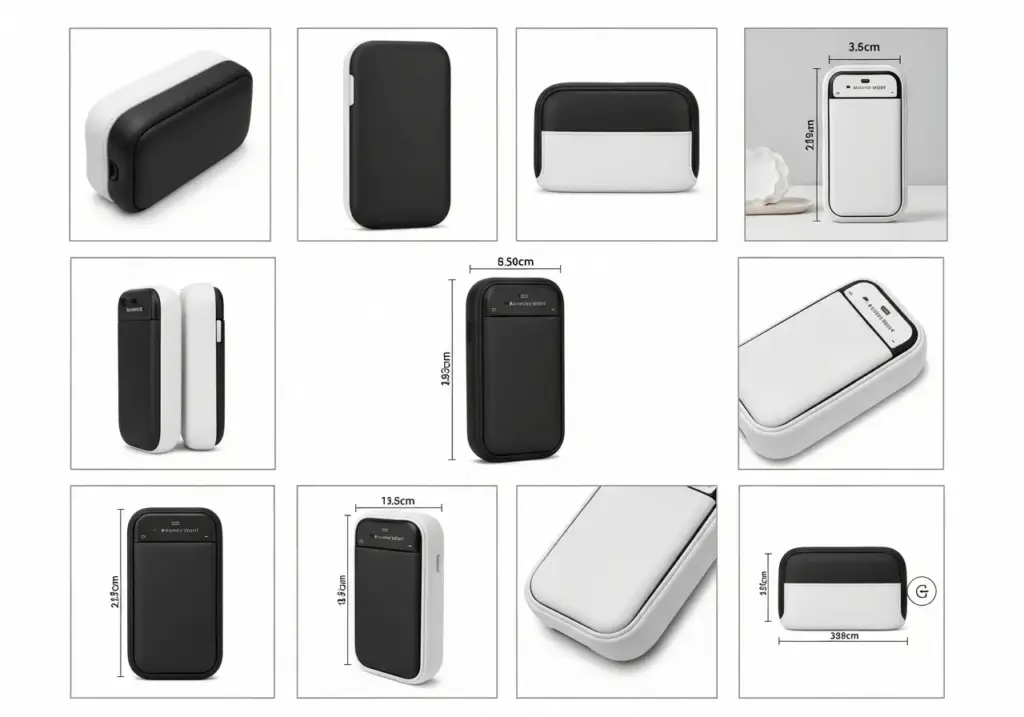
Provide images from various angles to give customers a comprehensive view of the product. Highlight key features, dimensions, and unique selling points. This helps customers feel confident in their purchase decisions.
Include Lifestyle Images
Lifestyle images show the product in use, helping customers visualize how it fits into their lives. For example, a kitchen appliance displayed in a modern kitchen setting creates a relatable and aspirational image.
Highlight Product Details with Close-Ups
Close-up shots are perfect for showcasing intricate details, textures, or unique features of your product. These images are particularly useful for products like jewelry, electronics, or textiles.
Add Infographics
Infographics combine visuals with text to convey important information quickly. Use infographics to highlight dimensions, features, or benefits in an easily digestible format. Ensure the design is clean and professional to maintain credibility.
Optimize for Zoom Functionality
Amazon’s zoom feature allows customers to examine products closely. Ensure your images are high-resolution (at least 1,000 pixels on the longest side) to remain clear and detailed when zoomed in.
Show Product Variations
If your product comes in different colors, sizes, or configurations, include images of each variation. This ensures customers can see exactly what they’re buying and reduces the likelihood of returns.
Use Appropriate Colors To Appeal To Shopper’s Emotions
Colors have the power to impact buying decisions. Warm colours like yellow and orange give a positive vibe about a product, eager customers to click the buy button. First, you can test varieties of colors and test which one goes well. Then select a brand color for your brand and use it for everything. It builds trust among customers in your product.
Conclusion
High-quality product imagery will be a critical determinant of sales on Amazon. These images not only make the product more attractive but also help build customer trust and increase your brand’s credibility. Paying attention to Amazon’s requirements for images, using professional photography, showing multiple angles, and highlighting product features, will significantly improve your listings’ performance. Adding lifestyle images and optimization for mobile users further helps drive engagement. After all, a picture tells a thousand words, and in e-commerce, it can be worth several thousands of dollars. So, invest in compelling visuals to make a lasting impression and unlock your sales potential on Amazon.
FAQ
How much do Amazon designers get paid?
Amazon designer salaries vary by role, experience, and location, but typically range from $60,000 to $120,000+ per year, with higher salaries for senior or specialized design positions.
What does an Amazon designer do?
An Amazon designer creates visual design, product assets, UI/UX layouts, marketing content, and branded graphics, ensuring a consistent and engaging experience across Amazon’s products and platforms.
Does Amazon have a design system?
Yes — Amazon uses a design system to maintain consistent branding, UI patterns, and visual standards across its products and services, which helps teams create cohesive and user-friendly experiences.
How many followers do I need to create an Amazon storefront?
Amazon doesn’t disclose any specific follower requirements to create a storefront through the Influencer Program, but applicants are typically required to have an active social media presence with at least ~1,000 followers or more to improve their chances of approval. Along with the number of followers, the quality of engagement is also important.
What is the easiest job at Amazon?
The easiest jobs at Amazon are usually entry-level warehouse roles, such as picker, packer, or sorter, as they require minimal prior experience and follow simple, specific tasks.
What are the 7 main principles of design?
The 7 main principles of design are balance, contrast, emphasis, movement, pattern, rhythm, and unity, which help create visually appealing and effective designs.