

The real estate market in the world has evolved rapidly, and visual presentation now plays a decisive role in buying decisions. Modern buyers expect more than static photos or simple floor plans; they want immersive, realistic previews before scheduling a visit.
This shift has made 3d modeling for real estate a robust sales and marketing tool. High-quality visuals help buyers emotionally connect with properties, even before construction begins. From online listings to investor presentations, visual clarity directly impacts trust, engagement, and conversions. This guide explains how advanced 3D modeling techniques increase buyer confidence, shorten sales cycles, and drive measurable revenue growth for real estate professionals.
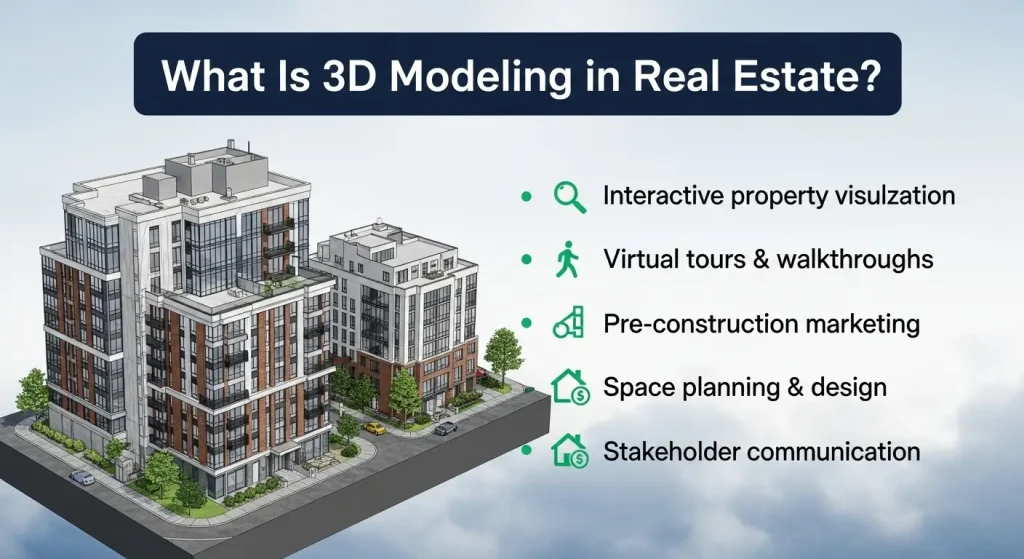
What Is 3D Modeling in Real Estate?
3D modeling for real estate refers to creating accurate, digital 3D representations of properties using architectural data, measurements, and design inputs. These models simulate real-world structures, materials, lighting, and spatial layouts.
- 3D models are the core digital representations that accurately capture dimensions and geometry.
- 3D renders are photorealistic images generated from models using advanced lighting and textures.
- Virtual staging digitally furnishes empty properties to showcase lifestyle potential.
- 3D walkthroughs and virtual tours allow users to explore spaces interactively.
Today, developers, agents, and brokers rely on 3D modeling in real estate to market pre-construction projects, enhance listings, attract investors, and support faster buyer decision-making across digital platforms.
Why Traditional Property Marketing Is No Longer Enough
Limitations of photos and 2D floor plans
Static images fail to communicate scale, depth, and spatial flow. Buyers often misinterpret room sizes or layouts, leading to confusion and unnecessary site visits. This limitation reduces engagement and increases drop-off rates in competitive listings.
Helps buyers visualise properties before construction
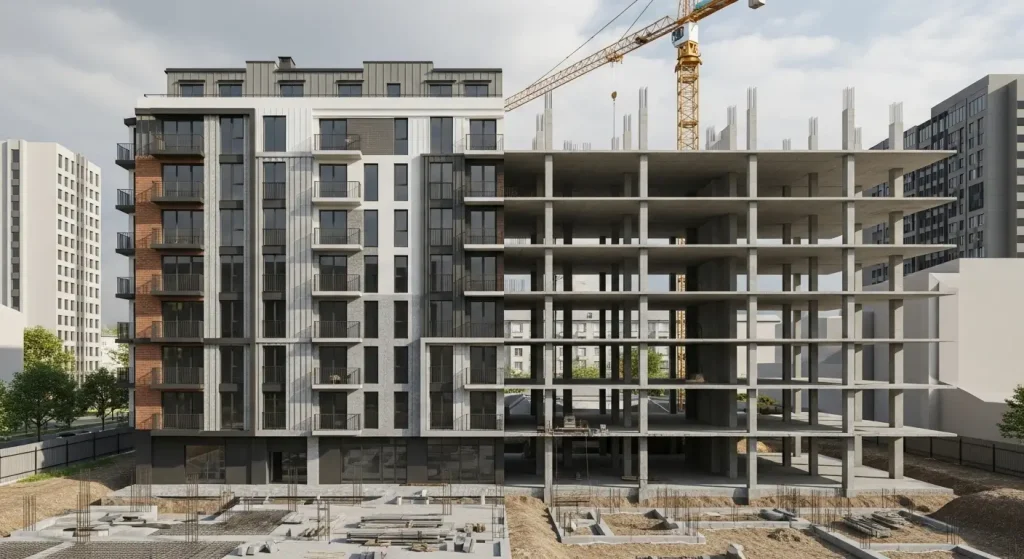
With 3D modeling for real estate, buyers can clearly visualize unfinished or off-plan properties. Realistic previews eliminate uncertainty, allowing developers to sell units before completion and secure early investments.
Builds trust and confidence in property listings
Accurate visuals create transparency. Buyers feel confident when they see realistic materials, lighting, and proportions. This trust significantly improves inquiry quality and reduces buyer hesitation.
Improves online engagement and listing performance
Listings enhanced with 3D modeling for real estate receive higher click-through rates, more extended page visits, and better lead conversion rates. Interactive visuals outperform traditional photos across real estate platforms.
Reduces sales cycle time for agents and developers
Clear visual communication minimizes repetitive questions and unnecessary property tours. Buyers arrive informed, accelerating negotiations and closing timelines.
Supports both residential and commercial real estate marketing
From homes to office complexes, 3D visualization for property sales works across all property types, delivering consistent marketing advantages in competitive markets.
How 3D Modeling Directly Boosts Real Estate Sales
Creates a Strong First Impression
In real estate, first impressions matter, and 3D modeling makes them unforgettable. High-quality 3D visuals allow buyers to instantly connect with a property by showcasing realistic layouts, lighting, and design details before they ever visit in person. This approach is especially powerful for luxury real estate businesses, like luxury properties in Hua Hin, where premium presentation plays a key role in buyer decision-making. By offering immersive and visually compelling previews, real estate brands can build trust, spark emotional interest, and significantly increase engagement from serious buyers.
Helps Buyers Visualise the Property Better
Photorealistic materials, accurate lighting, and proper furniture placement provide clarity. Buyers clearly understand space usage, layout flow, and room proportions, reducing uncertainty and emotional hesitation.
Speeds Up Buyer Decision-Making
When buyers fully understand a property, fewer questions arise. Virtual previews reduce the need for multiple site visits, enabling buyers to feel confident earlier in the sales funnel and move faster toward closing.
Increases Perceived Property Value
Premium visuals elevate perceived quality. Even standard properties appear upscale when presented professionally. This supports stronger pricing strategies and enhances brand positioning for agencies and developers.
Boosts Online & International Sales
3D visuals allow properties to be sold remotely. Overseas buyers, NRBs, and investors can explore properties without physical visits. These assets work 24/7 on websites, marketplaces, and campaigns worldwide.

Professional 3D Modeling Services for Real Estate
In highly competitive markets, DIY tools and low-quality modeling often fail to deliver results. Basic software may produce distorted proportions, unrealistic lighting, or inaccurate textures. These mistakes damage credibility and can mislead buyers, resulting in lost trust and legal concerns.
Professional accuracy is essential. Buyers rely on visuals to make financial decisions, and even minor inconsistencies can raise doubts. Expert teams ensure architectural precision, realistic lighting behavior, and correct material representation aligned with real-world construction.
Professional Expertise Includes
- 3d modeling services for real estate agents tailored to listings and campaigns
- 3D visualisation for property sales presentations and investor pitches
- Advanced workflows using industry-standard tools
- Sales-focused visual storytelling aligned with buyer psychology
Benefits of Hiring Professionals
Professionally produced visuals deliver consistent, high-quality results across all marketing channels. Listings receive more views, higher-quality inquiries, and stronger engagement. Assets can be reused for websites, ads, brochures, and presentations. Faster revisions and reliable delivery timelines help agents stay competitive and responsive.
Soft CTA: Agents, brokers, and developers should consult professional 3D modeling experts to strengthen credibility, improve buyer engagement, and maximize sales performance in today’s digital-first real estate market.

Key Use Cases of 3D Modeling in the Real Estate Business
Pre-construction property marketing
Developers use 3D house modeling for real estate to sell projects before construction. Buyers visualize outcomes clearly, helping secure early bookings and investor funding.
Residential and commercial property listings
Listings enhanced with 3D rendering for real estate marketing stand out across platforms. Clear visuals increase engagement and attract serious buyers faster.
Virtual tours and interactive walkthroughs
Interactive experiences allow buyers to explore properties remotely. This improves lead quality and supports global and out-of-state buyers.
Investor and stakeholder presentations
Professional visuals communicate project vision clearly. Investors gain confidence when designs, layouts, and usage scenarios are visually explained.
Real estate advertising and social media campaigns
High-quality visuals perform better in paid ads and organic campaigns. Eye-catching renders increase reach, engagement, and brand visibility.
Tips for Real Estate Professionals to Maximise Sales with 3D Modeling
Share accurate architectural data and requirements.
Precise drawings, measurements, and specifications ensure visual accuracy. This prevents misrepresentation and builds buyer trust from the first interaction.
Choose the right visualization style for target buyers.
Luxury buyers expect premium realism, while investors prefer clarity and data-driven visuals. Tailor presentation styles based on audience intent.
Focus on realism over heavy visual effects.
Over-stylized visuals reduce credibility. Natural lighting, accurate textures, and real-world proportions build more substantial buyer confidence.
Integrate 3D visuals across all marketing channels.
Use visuals consistently on websites, listings, ads, presentations, and emails. Unified branding improves recall and strengthens conversion performance.
Conclusion
Visual clarity has become a defining factor in modern property sales. High-quality 3D visuals enhance property appeal, eliminate buyer uncertainty, and create emotional connections before buyers visit in person. From faster decision-making to greater perceived value, 3D modeling for the real estate business delivers measurable advantages for agents, developers, and brokers. These assets continue working long after listing publication, supporting digital campaigns, international buyers, and investor presentations. As competition intensifies, adopting professional 3D visualization is no longer optional; it is a strategic investment in trust, efficiency, and long-term sales growth.
What is 3D modeling for real estate?
3D modeling for real estate is the process of creating a digital 3D representation of a property that helps buyers visualize buildings, interiors, and surroundings before construction is completed.
How does 3D modeling help sell real estate properties faster?
3D models allow buyers to clearly visualize the property layout, design, and space, which increases buyer confidence and helps properties sell faster.
Is 3D modeling useful for properties that are still under construction?
Yes. 3D modeling is especially useful for pre-construction marketing, allowing developers to showcase future buildings before they are built.
What types of real estate projects use 3D modeling?
3D modeling is used for residential homes, apartments, commercial buildings, office spaces, and large real estate developments.
How realistic are modern 3D real estate visualizations?
With modern technology, 3D visualizations can achieve highly realistic results, including accurate lighting, materials, landscaping, and interior details.